Monday, July 13
Travel time: 8 hours, 18 minutes
Distance covered: 758km
We set out for the German border at 8.15am, only 15 minutes behind schedule, though it stretches to 25 minutes when I have to go back for my glasses and my eldest son forgets his raincoat. The last time I drove up to Denmark by road, nine years ago, the border was almost invisible: you saw a modest blue sign with a circle of stars beside the road, drove past some deserted buildings and then noticed that the road signs had turned a different colour. Your phone pinged to tell you you’d switched networks. You hadn’t so much entered Germany as watched it materialise around you.
Now, however, the border is a solid barrier, thanks to the pandemic and right-wing parties who constantly bleat that something must be done about immigration without having a clue what actually needs to be done. Border crossings in Europe have become a kind of nationalist performance art, with the tourists as unwilling actors. About 2km from the border the traffic slows to a crawl and narrows to a single lane. The Schengen rules state that manned checks in the open-border region are only supposed to be a temporary measure in an emergency, but the signs reducing the speed limit in stages to 10km/h, the little trenches in the tarmac and the white carnival booth in the blocked lane containing two armed guards staring blankly at screens, give every indication that they will be permanent.
They have no effect whatsoever on security or the number of asylum seekers (actually, that’s not quite true: when the checks were set up they triggered a small spike in the numbers, because refugees who were stopped would immediately submit a claim to the border guards). But it’s an opportunity to look tough and own the libs, because they have to grumble and remember who put the blocks on the road to their holiday homes in Provence and Umbria. The whole charade of scanning our numberplate and driving past the booth takes about 10 minutes, from which I infer that Europe’s bright new border warriors are trying to run a 21st-century security system on ZX Spectrums. And then we speed on towards Denmark and the same piece of theatre again.
Getting to Iceland is a slog of more than 1,000km and today is the most gruelling stretch: nearly 800km, or 500 miles, of German and Danish motorways. I don’t want to insult the landscape by calling it dull, but let’s just say it’s less volcanic than Iceland. As ever, the Autobahn fails to live up to expectations. There are stretches where you can cruise along at a carefree 150km/h, but sooner or later you’ll get snarled up in queues at junctions or roadworks. The Danes are also refurbishing their motorways, but they spread the pain over long stretches it so the traffic keeps flowing at 80 km/h, whereas the Germans concentrate on a few pressure points, causing tailbacks that stretch back for kilometres. It also seems to be taking an inordinately long time to repair their roads: the works in Hamburg looked identical to the ones I drove through nine years ago. I suspect they were originally signed off by Konrad Adenauer or one of his unspeakable predecessors. If there are roads in hell, the Germans will be repairing them: the temptation of limitless speed shackled by the reality of endless queues.
The temperature stays in the mid-twenties as we head north, and if anything the air grows heavier. We break the journey into four sections, during which the scenery barely changes: flat yellow and green fields and minimal undulation. The route takes us past Århus (which I am disappointed to learn, as someone who grew up on Madness, is not in the middle of Årstrid) and Randers, names I only know from football, and the Lego mecca of Billund.
When we arrive in Aalborg at around half past five it is still 27 degrees. That’s in Aalborg, at the northern end of Denmark, about 20 miles further south than Aberdeen. The man in front of us at check-in is complaining about the lack of air conditioning in his room. “The heat, it’s terrible,” he bristles. The hotel receptionist tries to explain politely that until very recently, air conditioning would have been a senseless indulgence in Scandinavian hotels. “We’re not really used to this hot weather here,” she says, uneasily. We are all having to get used to these hot summers, and fast. But the man is having none of it. “You have no rooms with air conditioning? Zero?!” he splutters, perhaps thinking that if he says it enough times, the receptionist will eventually wink at him and say: “Actually, we do have one room right at the very top of the building, but we save it for our extra special guests.” Eventually he storms off, shoulders slumped, presumably to take a dip in the harbour.
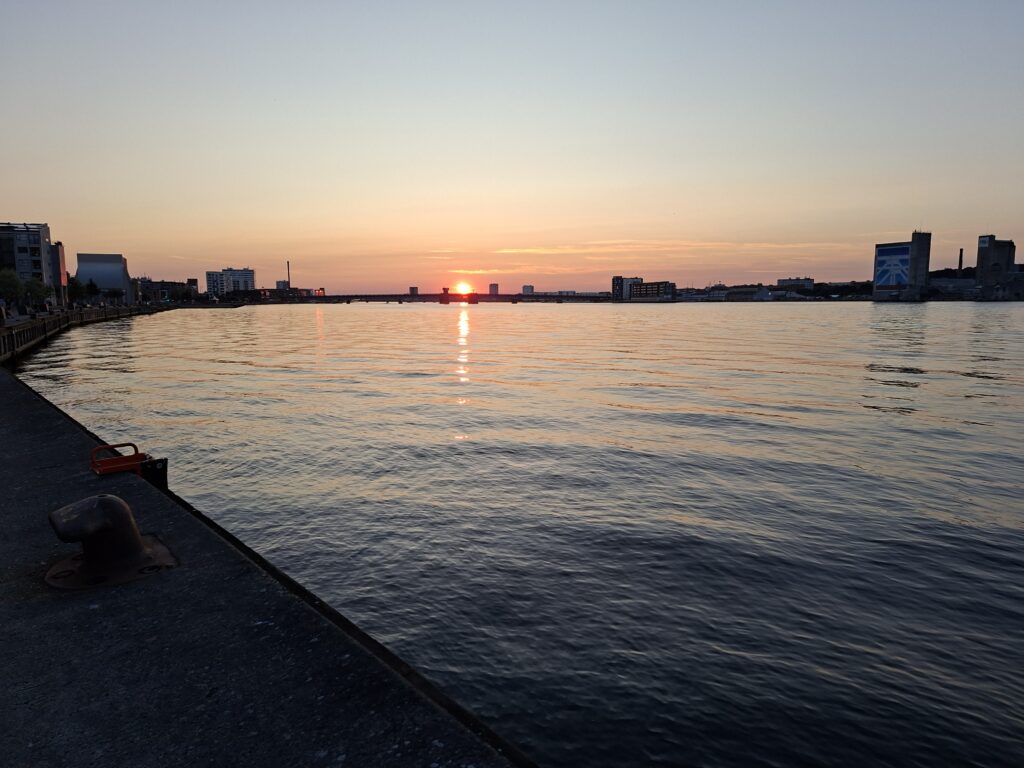
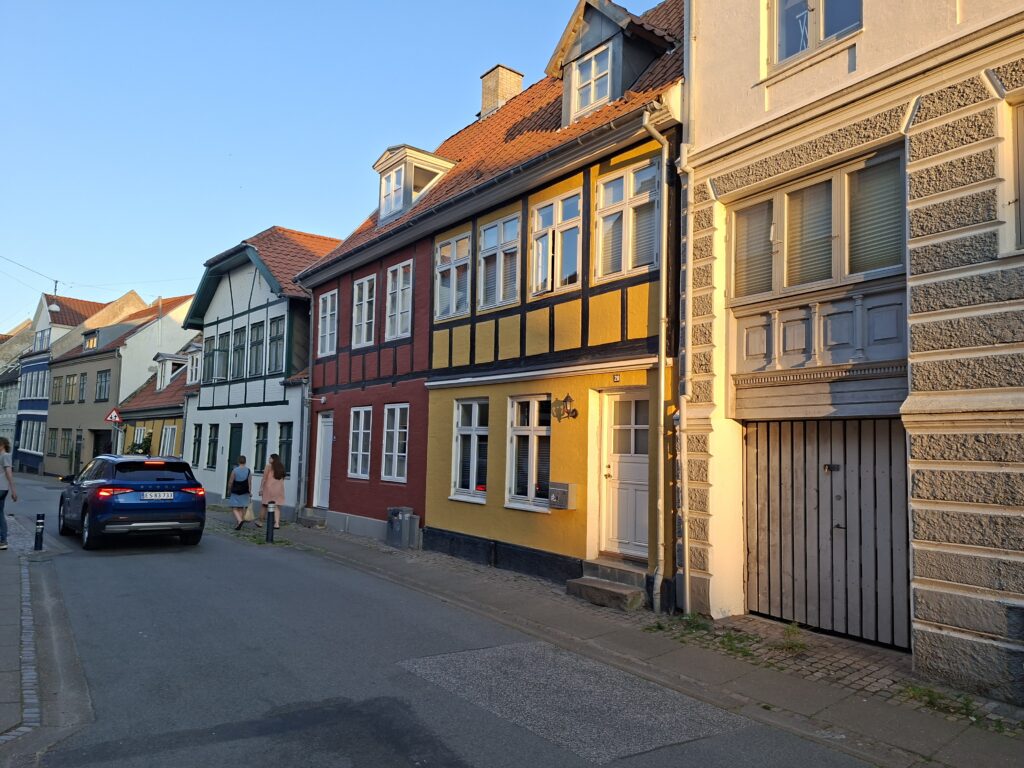
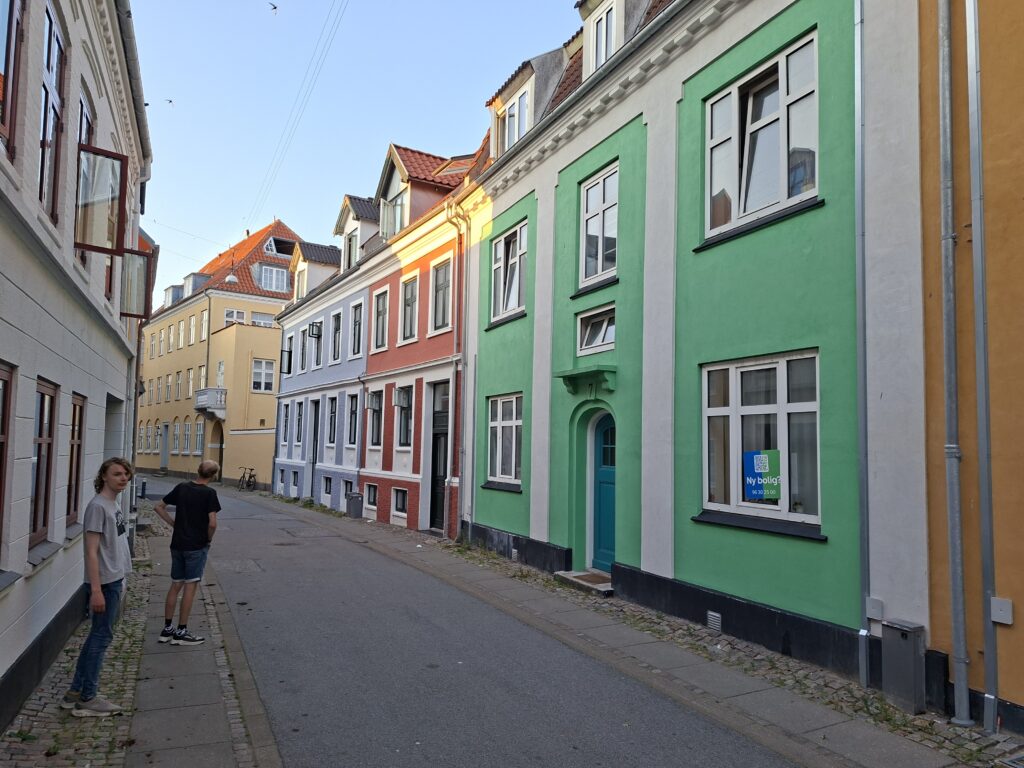
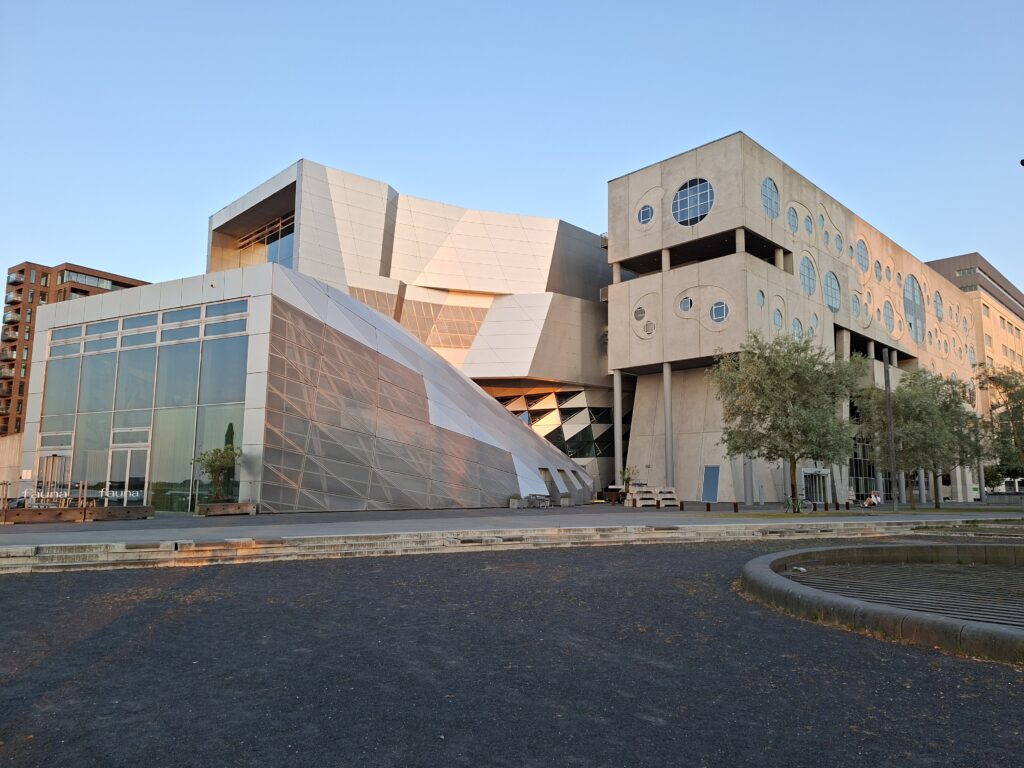
Aalborg is an unexpectedly striking place: it’s Denmark’s fourth largest city, with a population of 117,000, and has been settled for nearly 1,000 years. There’s a chaos about its architecture, like Brussels in miniature; medieval timber-framed buildings sit next to plain, Dutch brick office buildings, and down by the harbour is the futuristic university campus. It’s clearly a prosperous place: when I take a walk down by the quayside at sunset long-limbed people with easy smiles are promenading or buzzing past on electic bicycles, and a man in a motor boat is towing two boys on inflatable rafts that bounce on the waves. A survey by the European Commission 10 years ago found that people in Aalborg are the most satisfied citizens on the continent. It has all the hallmarks of successful provincial cities in Europe: clean, modern, with inviting public spaces and an air of efficient calm, but enough heritage to give it a distinct character. I sat down on a wooden slatted chaise longue by the harbour with a book and caught glimpses of people walking by as the sun went down.
Why do we travel? The question had bothered me since I saw the man flying into a rage at reception. The global village has brought most places in the world within reach, but made us less curious about them. The long road trips I took with my parents as a child, down to France and Italy with the three of us crammed into an Alfa Sud or a Fiat Strada with leather seats and no air conditioning, were more challenging, but in some ways more rewarding. They started straight after Christmas, when Dad would thumb through the Gites de France catalogue or its Italian equivalent, find the number of a local farmer or small businessman with a small cottage to rent, and phone them up in his elegant French, which he learned while hitchhiking through France as a young man. If we went to a new country, he would order the BBC Get By language tapes and spend hours in his study acquiring a working knowledge of Italian or Greek. One year he tackled Portuguese, only to decide to go to France again after all. There were barriers of language, currency and food, but it meant that other countries were properly foreign: places with different rules and customs, places to be discovered.
Nowadays we can book a hotel on the other side of the world in a couple of clicks, but when we get there we expect everywhere to have the same amenities and everyone to speak English. Nobody hitchhikes any more. And I will admit to being part of the problem here: when my sons and I stumbled out of our hotel at half past seven, tired and hungry, we walked into the first restaurant we found, which was a pizzeria. So I sat outside a restaurant in Denmark, eating (a very excellent thin crust) pizza at a table with a red checkerboard tablecloth and hating myself for it. Ordering pizza in Scandinavia is the middle-class equivalent of going out to Benidorm and demanding to be served fish and chips. All I can say in my defence is that we were tired, and you always know where you are with pizza.
