Tuesday, July 21

Travel time: 8 hours 15 minutes
Distance: 630km
Destination: Eskifjördur
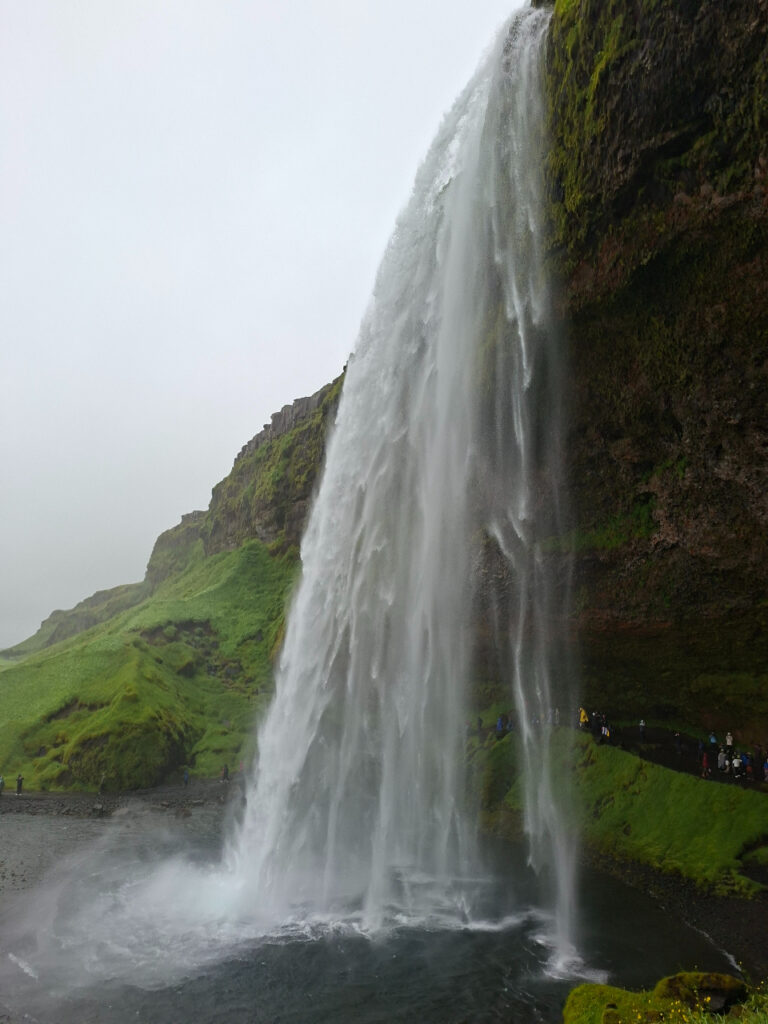
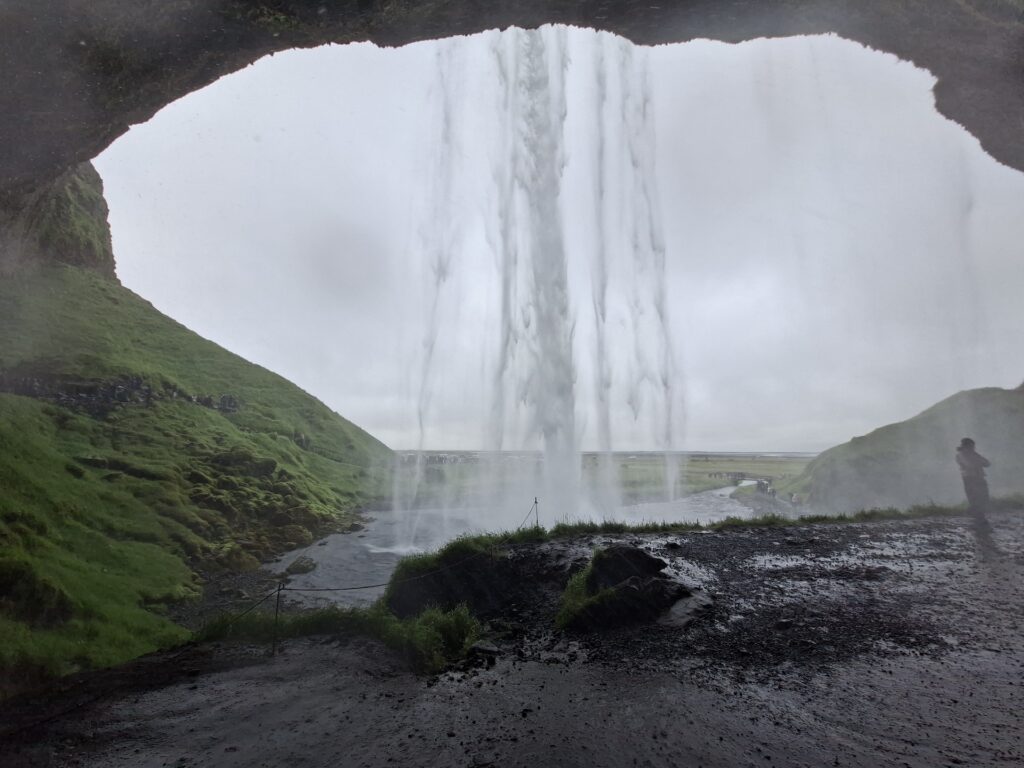
It’s the big travel day: a 630km trek across the south coast, and the first time I’ve really regretted not being able to stop and linger longer along the way. The road itself is long, flat and straight until we get towards the east coast, and the scenery changes dramatically along the way. As does the weather: Iceland sometimes seems to pack five or six seasons into a single day. When we set out there are grey clouds hanging over Selfoss; beyond the town, the valley opens out along a raised seabed, with black sand beaches and a barren tundra landscape of mossy mounds like giant sandbags scattered by the roadside. Either side, anvil-shaped mountains rise in the distance, their sheer cliffs, scarred by waterfalls, resembling something out of The Lost World. We stop at the Seljalandsfoss waterfall, the most visited in Iceland, and trudge the path beneath the rock. The water hits the basin with a noise like a train rumbling across a bridge.
Many of the tourists queueing up to take selfies in front of the waterfall are Chinese, in line with the trend in the rest of Europe in the last five years. The Chinese middle classes have the means to go globetrotting and are anxious to see the world in a non-intrusive way. Our tour guide yesterday, Rodrigo, said we were unusual in booking attractions along the route: most of his guests want to sit and gawp at the geysers and the waterfalls before moving on. There is also a fixation on getting the perfect picture. A section of black beach near Selfoss that has become treacherous since a storm in the autumn ripped away a section of coastline has acquired the nickname of “the Chinese takeaway” after a couple of unwary visitors were swept away as they waded out to sea in pursuit of the money shot.
Iceland has often been the inadvertent beneficiary of adverse events. One was the war; another was the eruption of Eyjafjallajökull in 2010, just as the country was reeling from a financial crisis that hit its tiny banking sector hard. The national bank had offered enticingly high savings rates to international customers and briefly reaped the investment capital, only to be hit hard on the backswing to come when the global financial system turned out to be built on even more unstable foundations than Iceland’s volcanic base. The collapse of subprime mortgages triggered an earthquake in the glass-fronted skyscrapers of New York, London, Frankfurt and Shanghai. Eyjafjallajökull spewed toxic volcanic ash into the skies that caused flights over most of Europe to be cancelled for nearly a week. The insurance companies were unprepared to take the risk of planes falling out of the sky because ash got into . Grounded passengers all over Europe and America passed the time by Googling: who is this smoking hot force of nature, so gorgeous and bewitching that she can stop air traffic, and how can I meet her? Within a decade, as the world recovered from the financial meltdown, Iceland’s annual visitors tripled.
Eyjafjallajökull is swaddled in thick clouds as we zip past, but there is a visitor centre with a huge sign bearing her tongue-twisting name. By the time we stop for a picnic lunch at Kirkjubaejarklaustur we are reaching the edge of the cloud cover the snow-covered peak of Hvannadalshnúkur is gleaming in the distant sunlight. We pause again at the ice-cold lake of Jökulsárlón, where the glaciers slide into the water just before meeting the sea. Translucent blue and white icebergs shimmer in the bright sun and tower over intrepid adventurers gliding between them in amphibious vehicles and canoes. A sign carries warnings not to walk on the icebergs or go in the water, but another advertises Iceberg Boat Tours, which sounds like a rejected Dragons’ Den pitch. As we are standing looking at the lake, literally dazzled by a spectacle, there is a loud crashing noise to our left and we look over to see an iceberg crumbling into the water. The lake is both an enthralling spectacle and evidence of the devastating impact of climate change: since 1970 it has grown fourfold as the Breiðamerkurjökull glacier recedes by 200m a year.
The stretch of road beyond the glacial lake is the most otherworldly of all, with ash-covered sand dunes and white mountains making it the look like a psychedelic desert. Further on the mountains are jet black pyramids coated in volcanic scree. There is not a tree to be seen. Eventually the road starts to zigzag and rise as the raised seabed ends and we enter a stretch of jagged peaks and mountain streams that resemble the Scottish Highlands. We weave our way along mountain roads and around fjords where the water shimmers a deep blue in the bright sunshine. The road is punctuated by one-lane bridges, none of which have traffic light controls: Icelanders put their faith in drivers’ patience and maturity. In the course of a day we have been through three seasons and traversed three continents.
It is half past seven by the time we arrive at our final stop, Eskifjördur. The small fishing village at the head of a steep-sided fjord has a couple of villa-style houses down by the shore, one of which dates from 1903 and must have been an extravagance for its time. We are staying in a chalet on a promontory that juts out into the water at the far end of the village. It’s about a quarter of the size of the last chalet, with the boys’ beds crammed into a loft space up a ladder. There is a communal hot tub for the dozen tiny wooden houses, built into the shell of a former Shetland pleasure cruiser, which nobody uses. We have fish cakes from the Bonus store, which are unexpectedly good and quick to cook, then get into bed at the end of another exhausting, exhilarating day.

