Tuesday, July 14
Travel time: 48 minutes (car), 13 hours (ferry)
Distance covered: 71km
Destination: Hirtshals and beyond
I must begin by conceding that air conditioning would have been a blessed relief last night, because the room was oppressively hot. I managed to improvise by wedging a fan in an open window and blasting in cool air from outside, but when the sun came up at around 4am and the seagulls stirred I was woken by the noise and couldn’t get back to sleep until I shut the window, at which point the sweltering air kept me awake instead. I got up, showered, went down for breakfast in an area that felt more like an enclosed courtyard, and loaded up the car for the next stage of the journey.
Aalborg might look like an outpost on the map, but it is well connected to the rest of Scandinavia by sea. Hirtshals is 45 minutes’ drive to the north, with boats to Norway, the Faroes and Iceland, while 45 minutes east is Frederikshavn, where ferries go to Oslo and Gothenburg. We head north to Hirtshals, through more flat fields; as we near the port we pass a couple of Faroese cars, tentatively enjoying the rare experience of being on a motorway.

I seem to have inherited my father’s obsession with finding the cheapest fuel prices on long, cross-border road trips. Dad would make it his mission to fill up with petrol in Luxembourg and get across northern France into Germany before refuelling again, in the days when France had much higher pump prices than its neighbours. It was a squeaky-bum operation given the Fiat Strada’s fuel economy and tank size. The weekend before our holiday, I was at a music festival in Belgium with my son and took the opportunity to fill up with enough petrol to get right through the Netherlands and into Germany, bypassing the high Dutch prices.
Iceland has much lower fuel prices than anywhere else in Europe because of its kilometre-based tax system – hence the bill you receive from the Icelandic government – so if you arrive on the island with a full tank you’re effectively being double taxed. By charging my hybrid car in Aalborg I had just enough power and fuel to make it to Hirtshals with 25km left on the dial – just enough to reach the first petrol station in Iceland. I hope it’s not closed or I’m screwed.
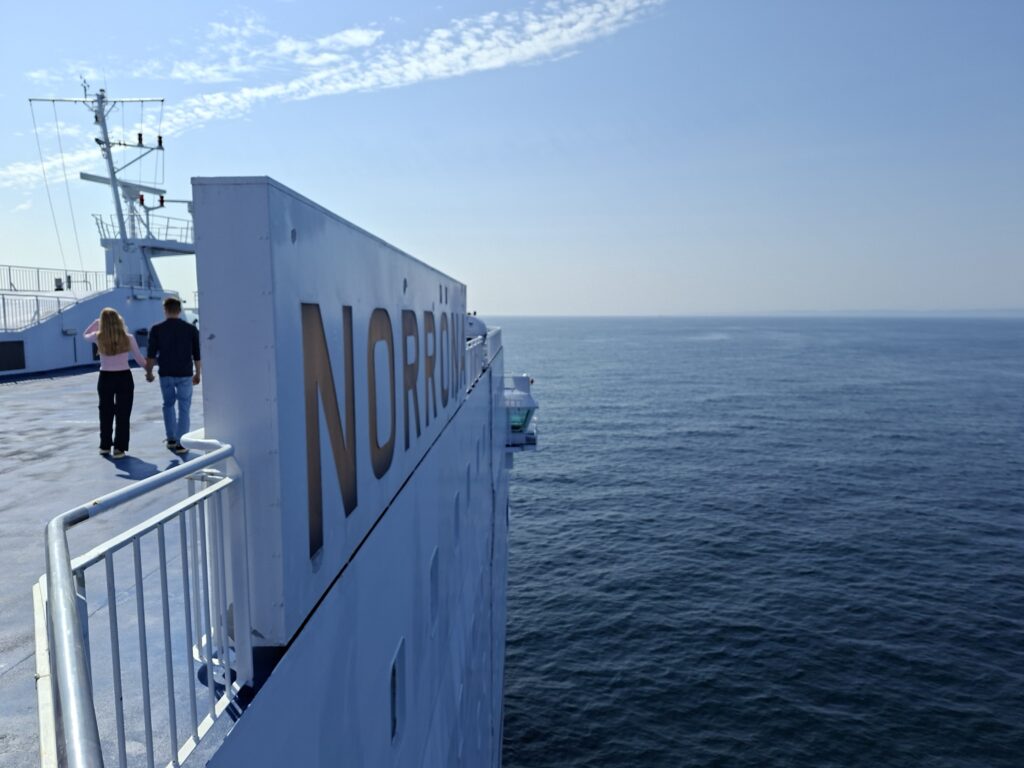
At the port we find we are far from the only long-haul travellers. The range of nationalities is staggering: there are cars from Germany, France, Belgium, the Czech Republic, Spain, Lithuania and Slovenia, as well as Icelanders and Faroese on the way home. And Dutch cars, including ours, because the Dutch go everywhere by sea and usually have the loudest voices on the boat. We roll on to our ship, the Norröna, sort out a problem where we’ve been given one cabin when we booked two, log in to the on-board WiFi and settle in.
Smyril Line is based in the Faroes, but most of the stewards seem to be Icelanders; the kitchen and cleaning staff, inevitably, are Filipinos. They have gone to a lot of trouble to make it the most luxurious regular ferry crossing in Europe. There is a swimming pool and fitness room on board. There is a well stocked library, with desks for working (and blogging) and a bar that serves the best coffee I’ve ever drunk at sea. The lunch buffet is disappointing, but dinner more than makes up for it and the pastries at breakfast are sensational.
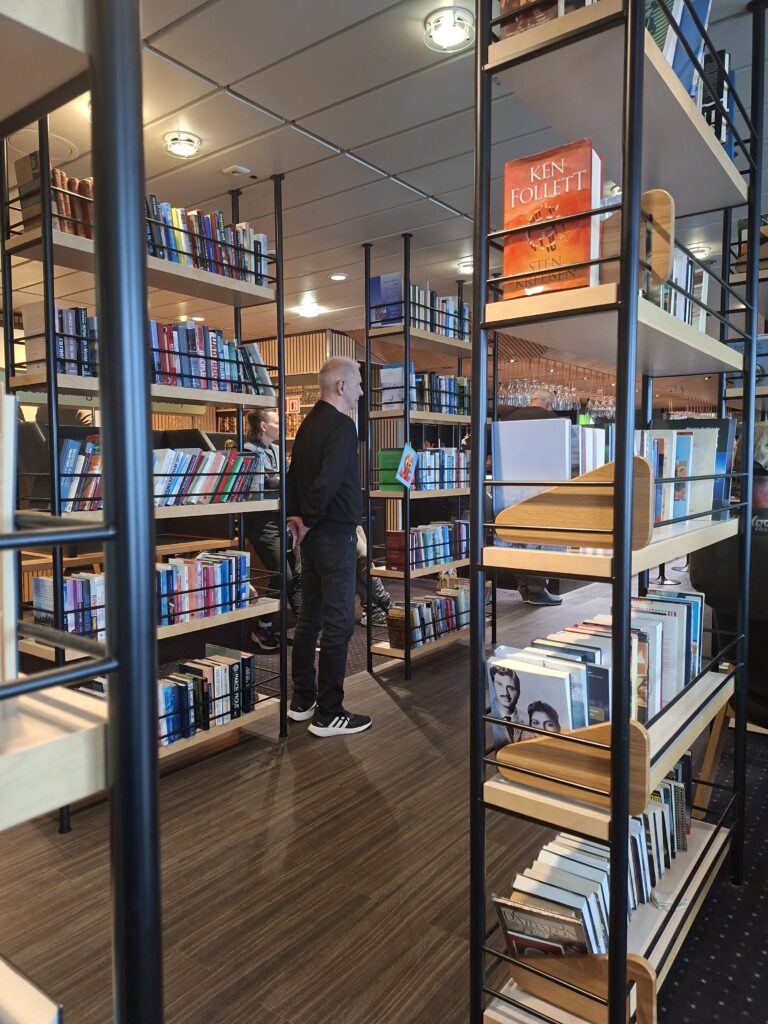
The top-deck bar has panoramic windows so you can look out to sea in all weathers. The cinema shows four films a day. There are enough quiet spaces to ensure it never feels claustrophobic, even when you’re at sea for 48 hours. In the evening I sit in the library bar with a beer, watching a World Cup semi-final on a big screen with my son and people from all over Europe, and wonder if I will ever experience such a perfect moment again.
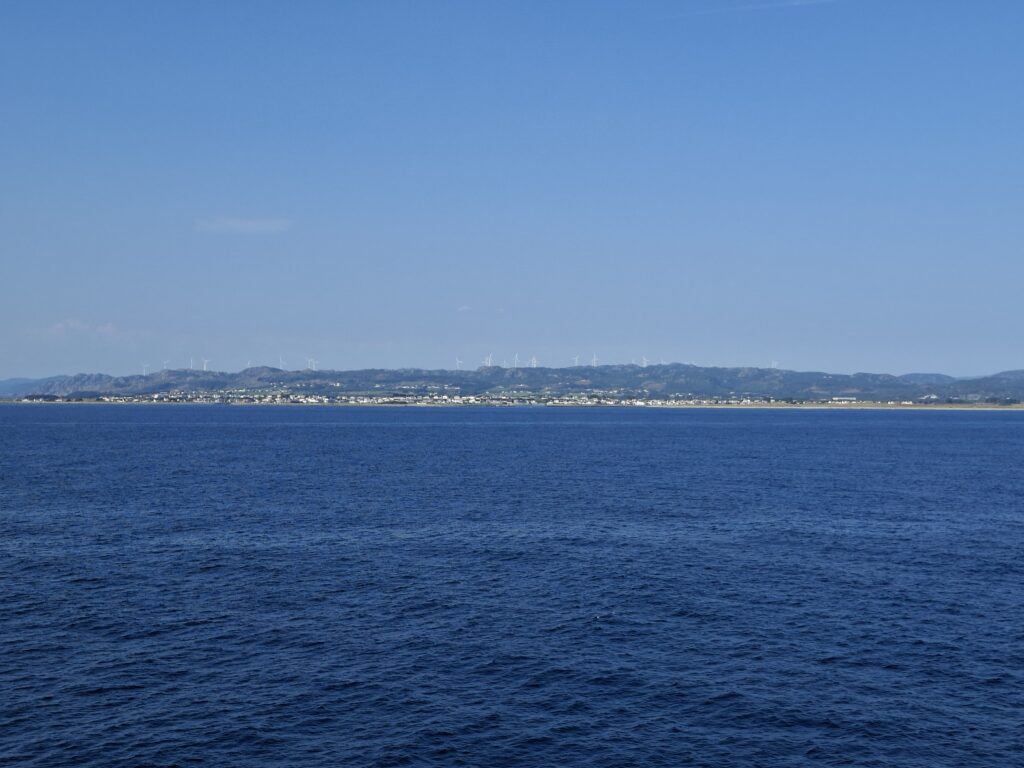
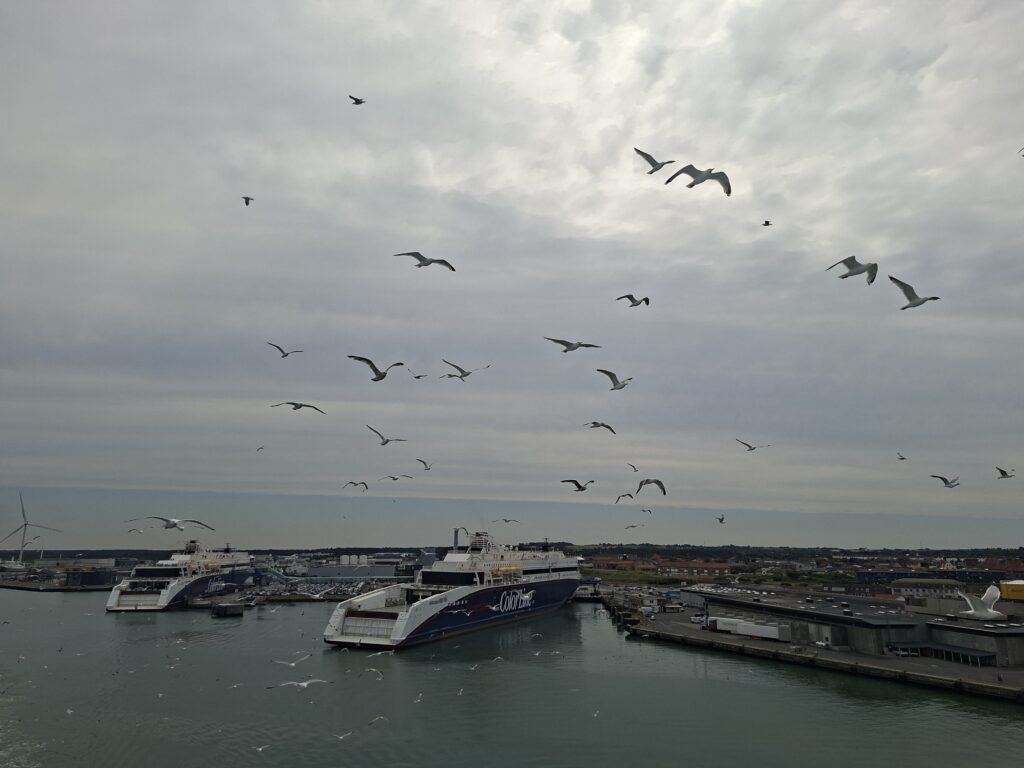
Hirtshals is a typical European industrial port, with a smattering of houses between the cranes and warehouses. As we pull away, an astonishing mass of seagulls erupts into the sky and follows the boat in a tight procession, gliding and squawking, as if escorting us out of the port. The boat sails north, follows the coast of Norway for most of the day – we can see houses, yachts and patrol vessels from the upper deck – and then heads out to the open sea at a steady 21 knots, or just under 40 km/h. At some point in the early hours we will past the northern tip of Shetland before docking in Torshavn in mid-afternoon. Then we will turn north and begin the final leg to Iceland.