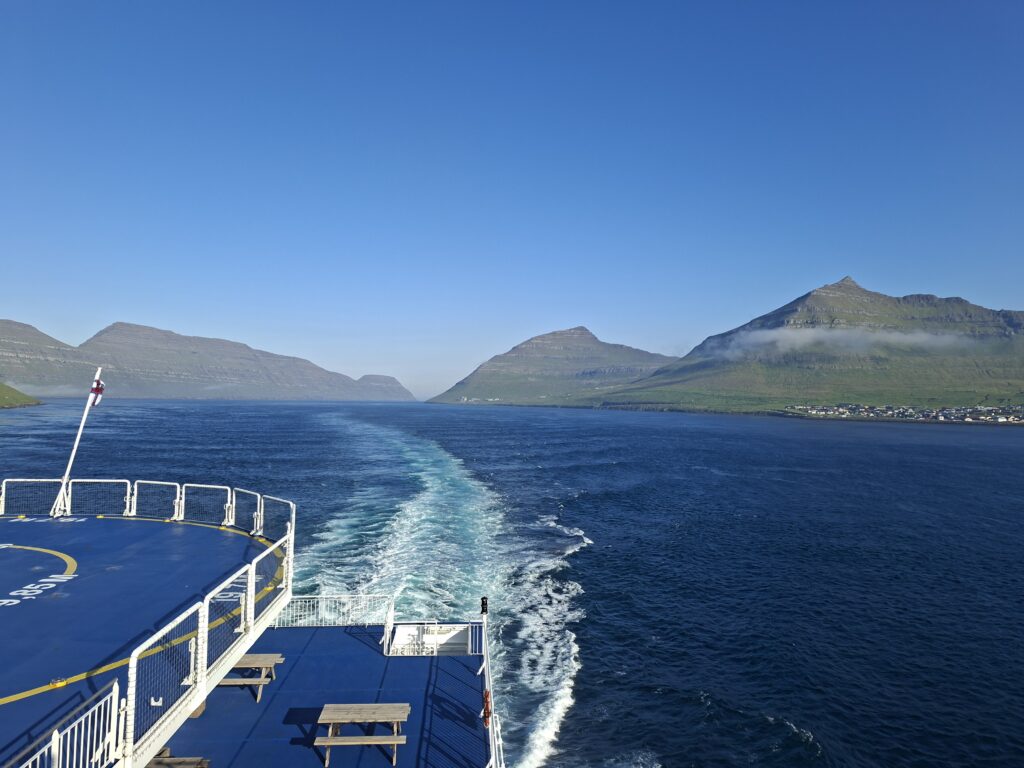
Wednesday, July 15
Travel time: 24 hours (ferry)
Destination: Torshavn & Seyðisfjörður
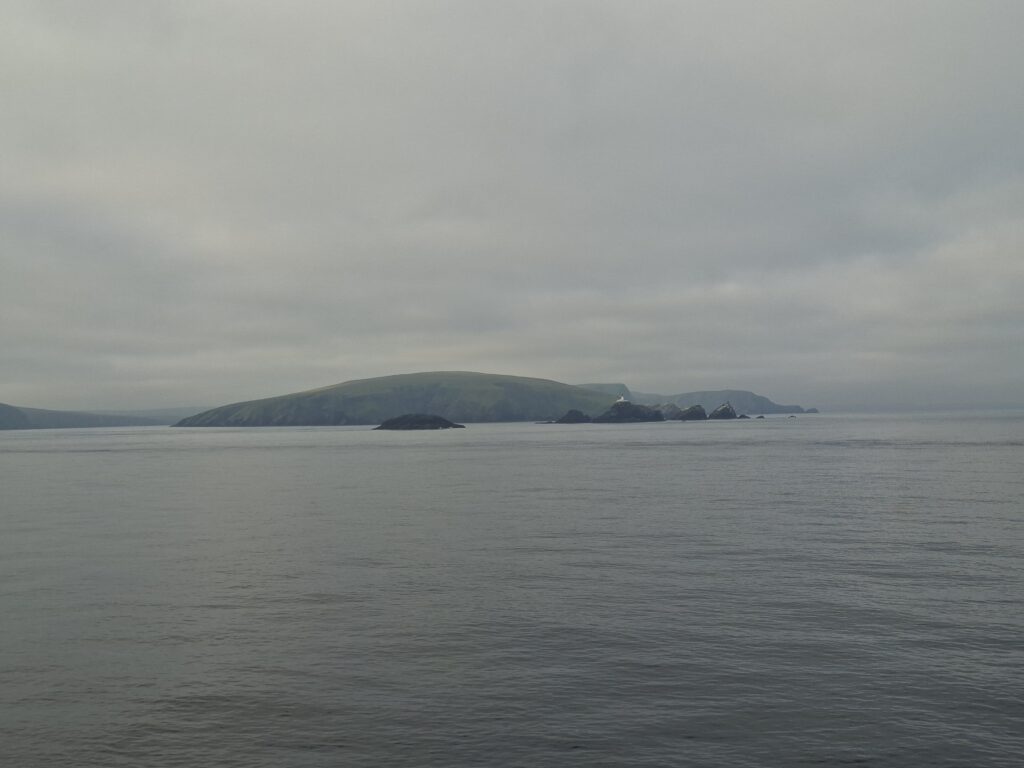
It’s not generally a good thing to be surprised by a lighthouse. But when I wake up at 7am and check the ship’s location app, I discover to my delight that we are right alongside the north tip of Shetland. I scramble out of bed, pull on some clothes, grab my phone and rush up to the outside deck to be confronted by the low peaks of Haraldswick and the Muckle Flugga lighthouse. It’s cloudy, but not raining, which counts as a good day in Shetland. The air is cool and breezy, gannets are scooting over the waves and I’ve had the unexpected bonus of seeing Scotland before breakfast.
There are still two hours to kill before the boys get up, so I go down to the fitness room and pound the treadmill for 20 minutes. I read in the library, wake the boys for breakfast at nine, sit and write this blog while watching a tennis match at the Swedish Open in which the Dutch player, Botic van de Zandschulp, is struggling to justify his seeding.
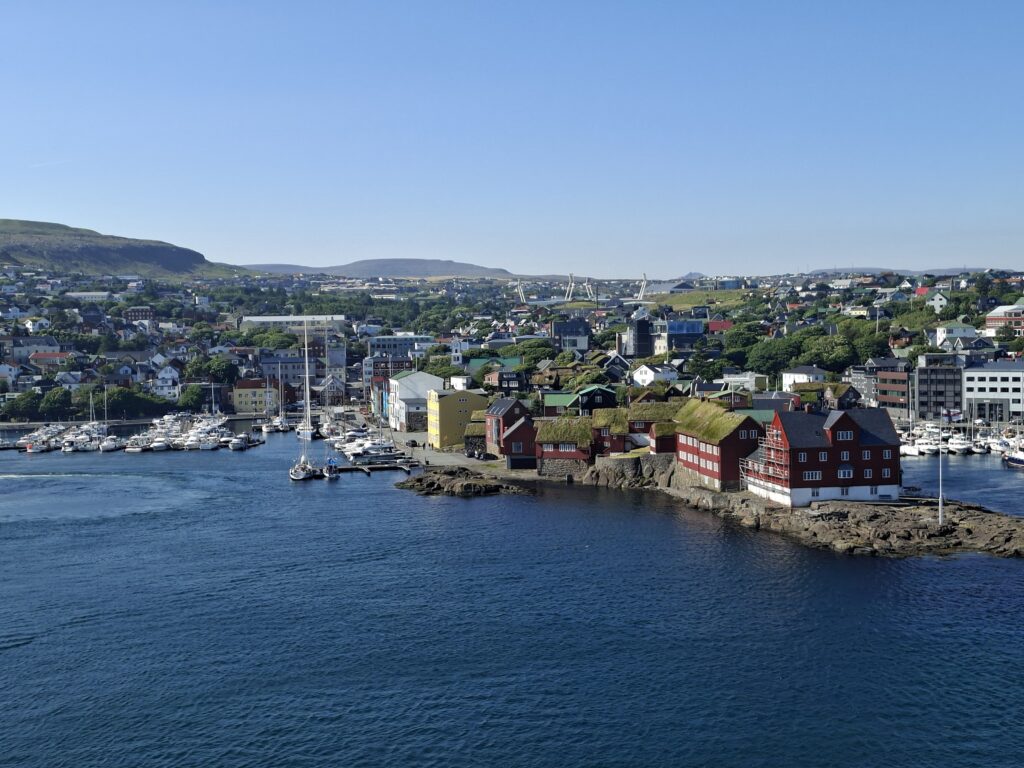
I’ve noticed a few people crocheting on this ferry. Another thing I’ve seen for the first time in ages is paper maps, the type we used to navigate by on those family road trips, when the place you were trying to find was invariably right on a fold that had become a tear through repeated use. People are unfolding their maps and poring over them, marking destinations with pens and stickers. The advantage of slow travel is you have time to make plans and think ahead. A lecture on Iceland in the library bar by one of the stewards is packed out: these are the kind of tourists who research their destination thoroughly and constantly update their knowledge as they go along.
We are told that the Icelandic glaciers are one of the best places to witness the effect of global warming: they are visibly receding every year, and at the current rate of decline they will vanish in 200 years. “If you want to know if these effects are real, take a trip to Iceland,” the steward says. “And if you want to know if the earth is flat, go into space.” Iceland and the Faroes are made of basalt, he explains, hence the jagged landscape, while Shetland is forged from granite, which is harder wearing, so it will still be standing long after its northern neighbours have crumbled into the sea. He gives us tips about driving in Iceland and warns that going off road is “100% illegal,” prompting an anecdote about a bunch of French tourists who took their Jeep off the beaten track and became celebrities for the wrong reasons in the local social media apps. That’s the danger with visiting small remote communities: a few acts of stupidity will get you banished in no time.
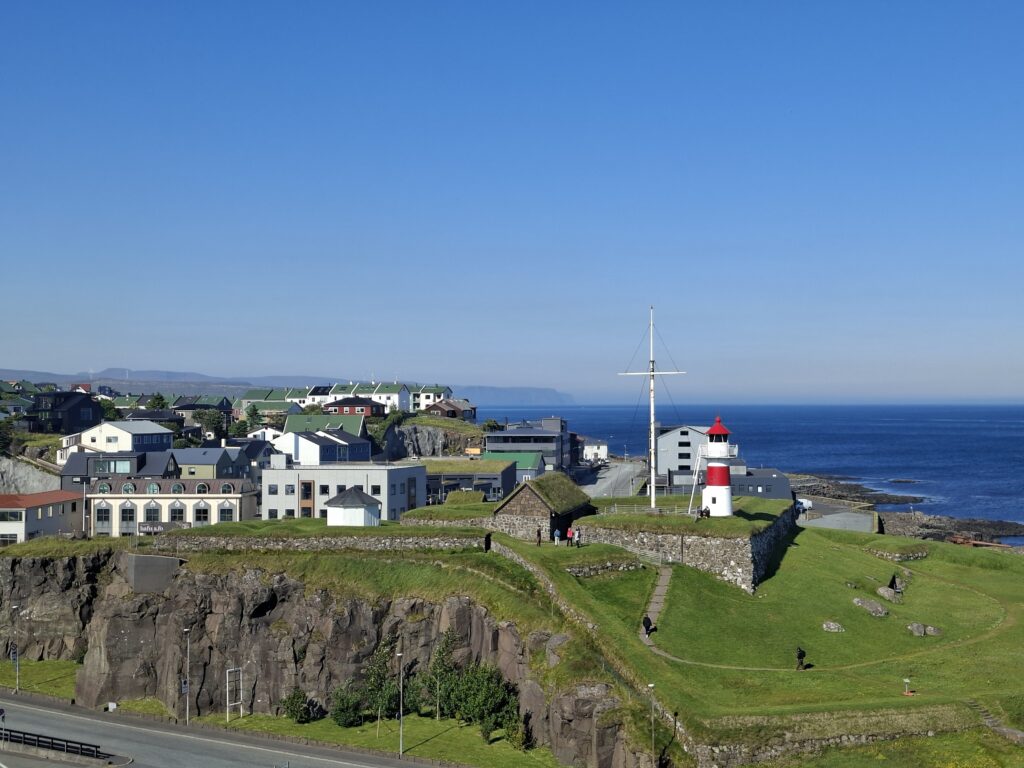
At dinner time we arrive in Torshavn to unload the passengers that are travelling to the Faroe Islands and take on others who are doing the full Iceland and Faroes round trip. Torshavn is a bustling harbour town and its multi-coloured houses look glorious in the sunshine, but I can’t help wondering what it must be like in late November. This is what I call the Rothesay test: if you’re ever tempted to move to a place for its unspoilt beauty, first check out what it’s like on a dark winter’s day. Countless people who sell their flats in London and buy a mansion in the Scottish Highlands move back within a year because the cold, dark and rain catches them by surprise. On the Faroes I’m guessing it’s the same story but with stronger winds.
Tomorrow we arrive in Iceland, five days after we left home. That’s proper slow travel.