Thursday, July 16
Travel time: 9 hours (ferry), 4 hours 15 minutes (car)
Distance covered: 335km
Destination: Dalvik
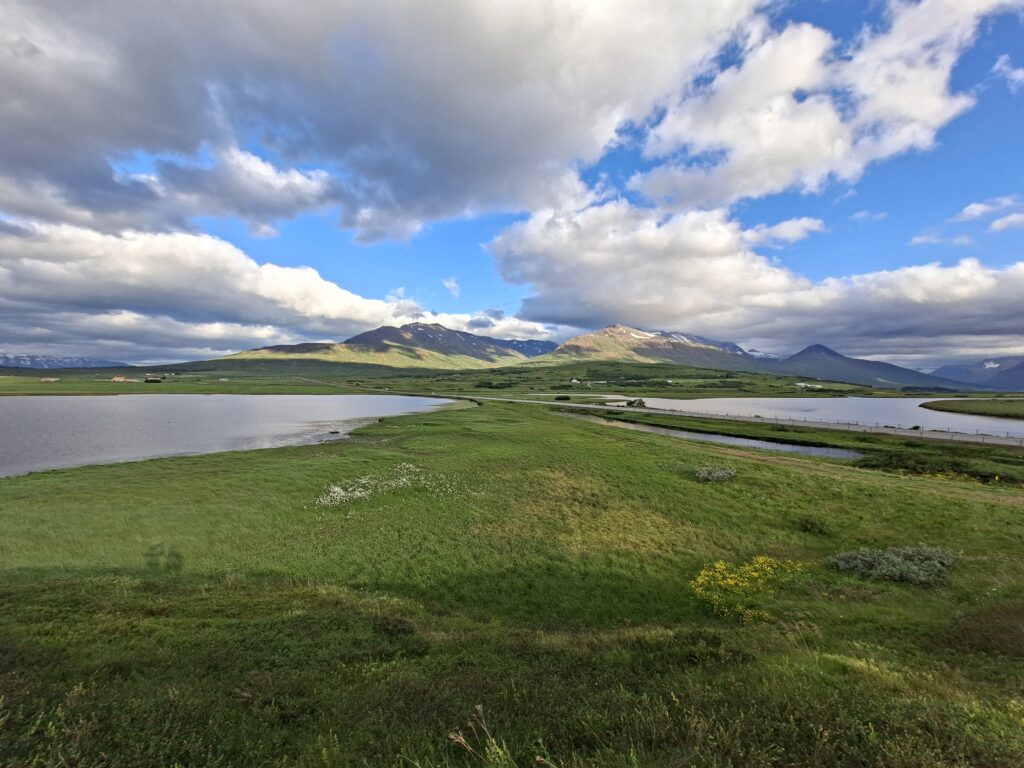
Iceland is a preposterous place in many ways. A huge island thrown up near the Arctic Circle by volcanic ruptures should be bleak and hostile, not lush and green and teeming with wildlife. Snow-dappled mountains rise everywhere like chunks of cheese hacked up by a drunken giant. We saw one in the distance that was the exact shape of a tea-cosy. Iceland has things in abundance that are scarce in other places: volcanoes, geysers, precipitous coastal roads, while things that are commonplace elsewhere are rare here: there are no native butterflies, for example, though some adventurous European species visit in summer (mosquitoes have just arrived as well: the nippy climate tourists were first spotted last year). There are so many waterfalls it looks as if they were put there by a 10-year-old who’s just learned how to build them in Minecraft. The whole landscape has a strong Minecraft flavour, with its lava caves, craggy hillsides, broad tumbling water courses, sudden variations and unstable weather. Every time you turn a corner you are assaulted by yet another stunning mountain range, plain or inlet. The place is visually exhausting.
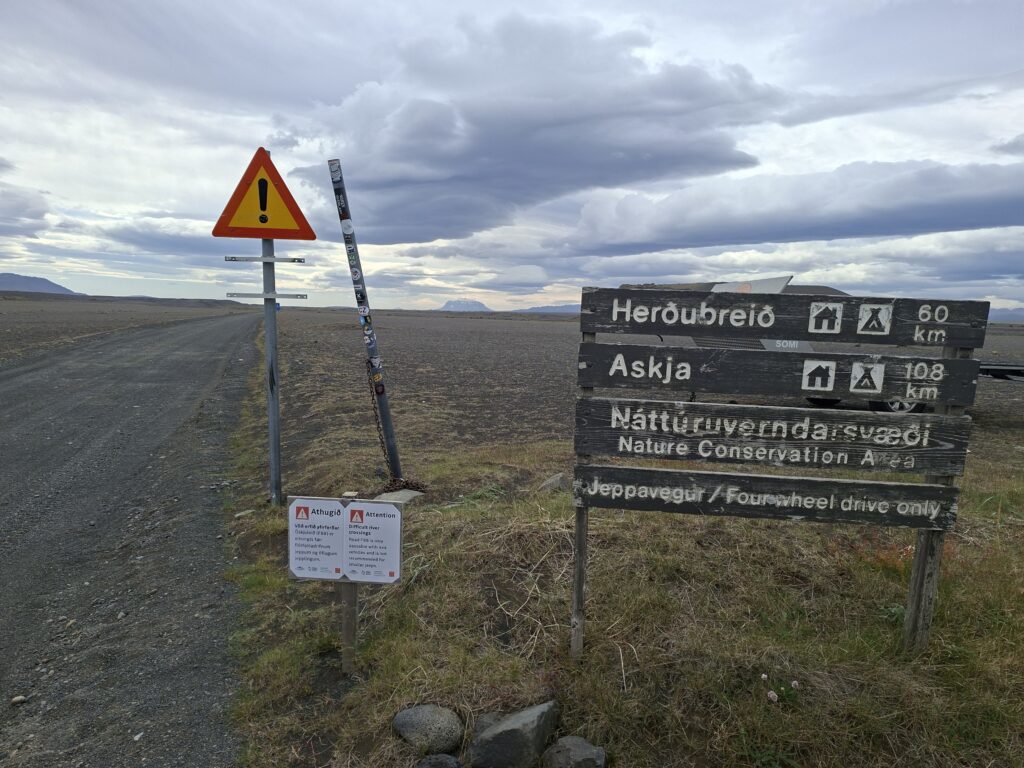
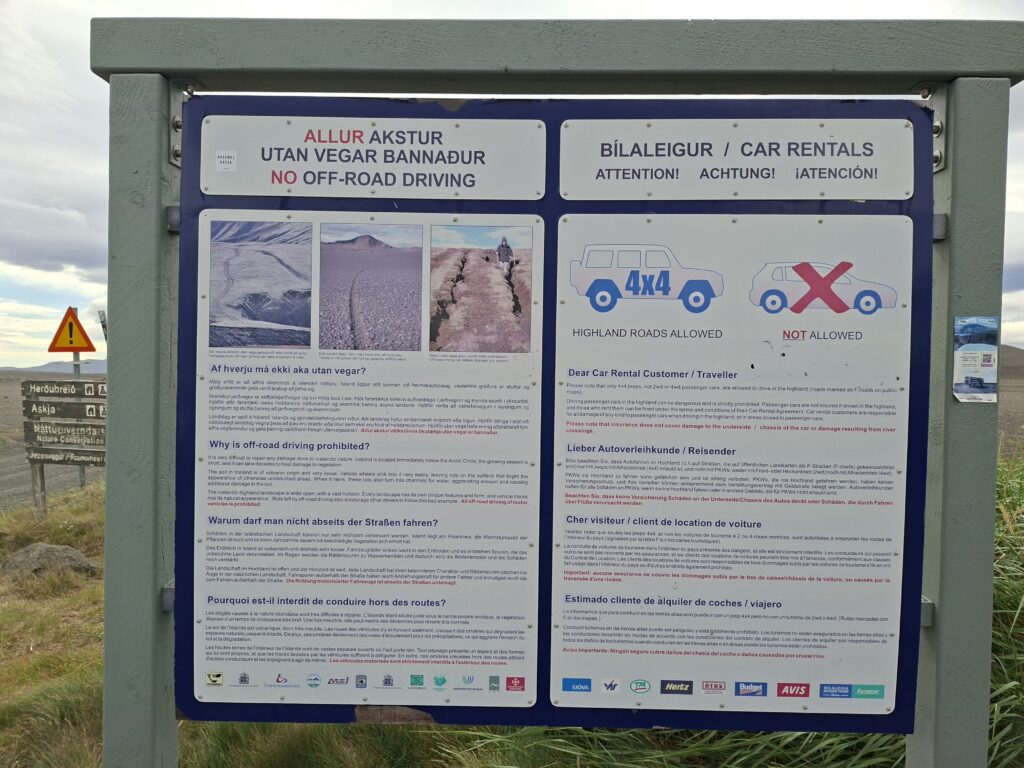
But it is, in fact, a hostile environment where life has to work hard to survive. The bewitching landscape carries an undertone of menace. In Seyðisfjörður, where the Norröna pulls in, a huge landslide damaged 10 houses when 570mm of rain fell in five days in December 2020. Our guide on the boat took pride in explaining how the rubble was used to build defences against future land movements. These days Icelanders understand their place in the ecosystem better than most humans; they know technological advances have to support nature, not exploit it, or there will be consequences. It is one reason off-road driving is so deeply frowned upon: grasslands that have taken centuries to gain a tentative footing can be crushed in minutes by the impact of a bitumen tyre.
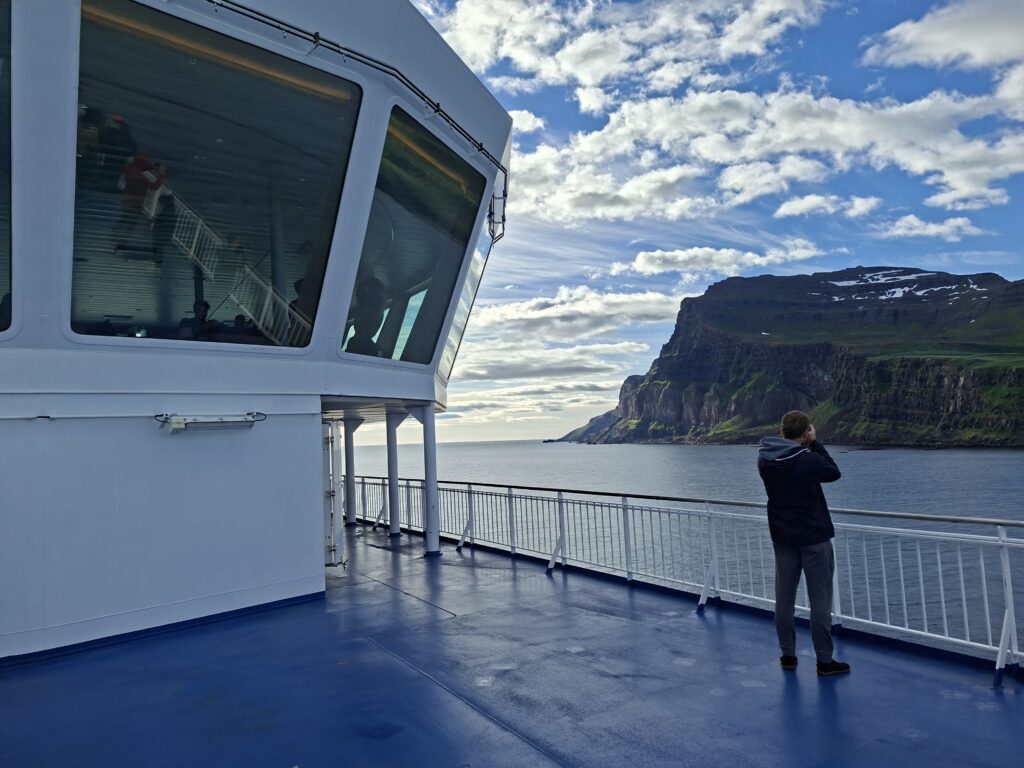
The long fjord at Seyðisfjörður is a grand entrance, treating the passengers to our first glimpse of the eastern mountain ranges. Even at 8am people can be seen trekking across the peaks on what, at ground level at least, is a bright, calm summer’s day. The sea was bumpy for a couple of hours after midnight after the mist closed in above the Faeroes, but luckily it settled for the second half of the night. The first stage of the road journey takes us through the ragged landscape of the east coast, with a succession of spectacular waterfalls, before we hit the number 1 – the 1600km ring road, which will be the basis of our tour. The road route crosses flat plains that resemble the Scottish highlands, only on a far larger scale, like Glen Coe and Rannoch Moor stuck on a repeat loop. The brooding clouds only enhance the effect. I had worried that the roads would be similar to Scotland in summer, with queues of cars crawling behind slow-moving caravans, but in fact the traffic is relatively light and the long, straight road sections offer plenty of opportunity to overtake slower vehicles. For most of the route the 90 km/h speed limit is eminently achievable. The only downside is every time a truck or tanker roars past on the opposite site it sprays grit at your windscreen and makes the car shudder timidly.
About halfway through the journey I notice a strange smell in the car. I want to ask the boys what they’ve been eating, but it quickly becomes too intense to blame on human digestion. Then we reach a mountainside the colour of burnt ochre and I realise we have reached the sulphur-drenched landscape of Námafjall, a geothermal area that looks, feels and smells otherworldly even by Iceland’s standards. We see people standing by smoking mud pools and walking extremely cautiously across the spongy plains. We don’t have time to stop, but drive on towards the north coast of Akureyi and Dalvik.
I swerve right at the last minute to avoid the Vadlaheidi tunnel, Iceland’s only toll road. It was built to take traffic away from the Vikurskard mountain passage, which is a steep and winding route. In bad weather the tunnel is a very sensible choice, but the clouds have cleared so I take a chance – motivated, I confess, by thrift – and am rewarded by a spectacular descent towards Eyjafjörður and Akureyi, Iceland’s fourth largest town. My tip to travellers taking the same route would be to check the weather app obsessively and decide at the last minute whether to take the mountain pass or the tunnel. The time saving is only around 12 minutes, but the Vikurskard route must be treacherous in wet and windy conditions.
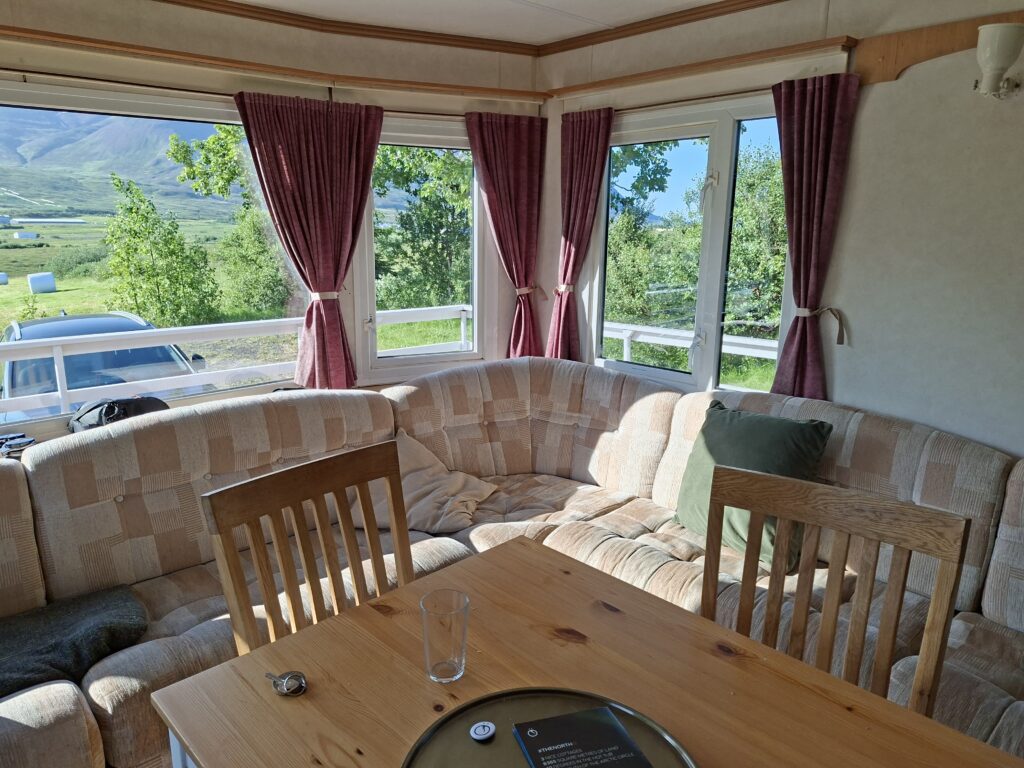
Akureyi is big enough to have roundabouts and traffic lights (with heart-shaped red lights to say “we love you for waiting” – Iceland treads a fine line sometimes between awe-inspiring beauty and suffocating tweeness). As we head north on the 82 road the skies darken and I worry we will arrive in Dalvik in a downpour, but the last range of peaks hold the heavy clouds back. Our cabin, a slightly worn but cosy static caravan, is at the top of a small hill and buffered by a stiff gale when we arrive. It is advertised as a cottage, but looks like it was imported straight from a caravan park on the north Norfolk coast. From the interior, with its stuffed-marshmallow sofa, I suspect it did indeed come from the UK sometime in the last century: it even has British-style three-pin plugs.
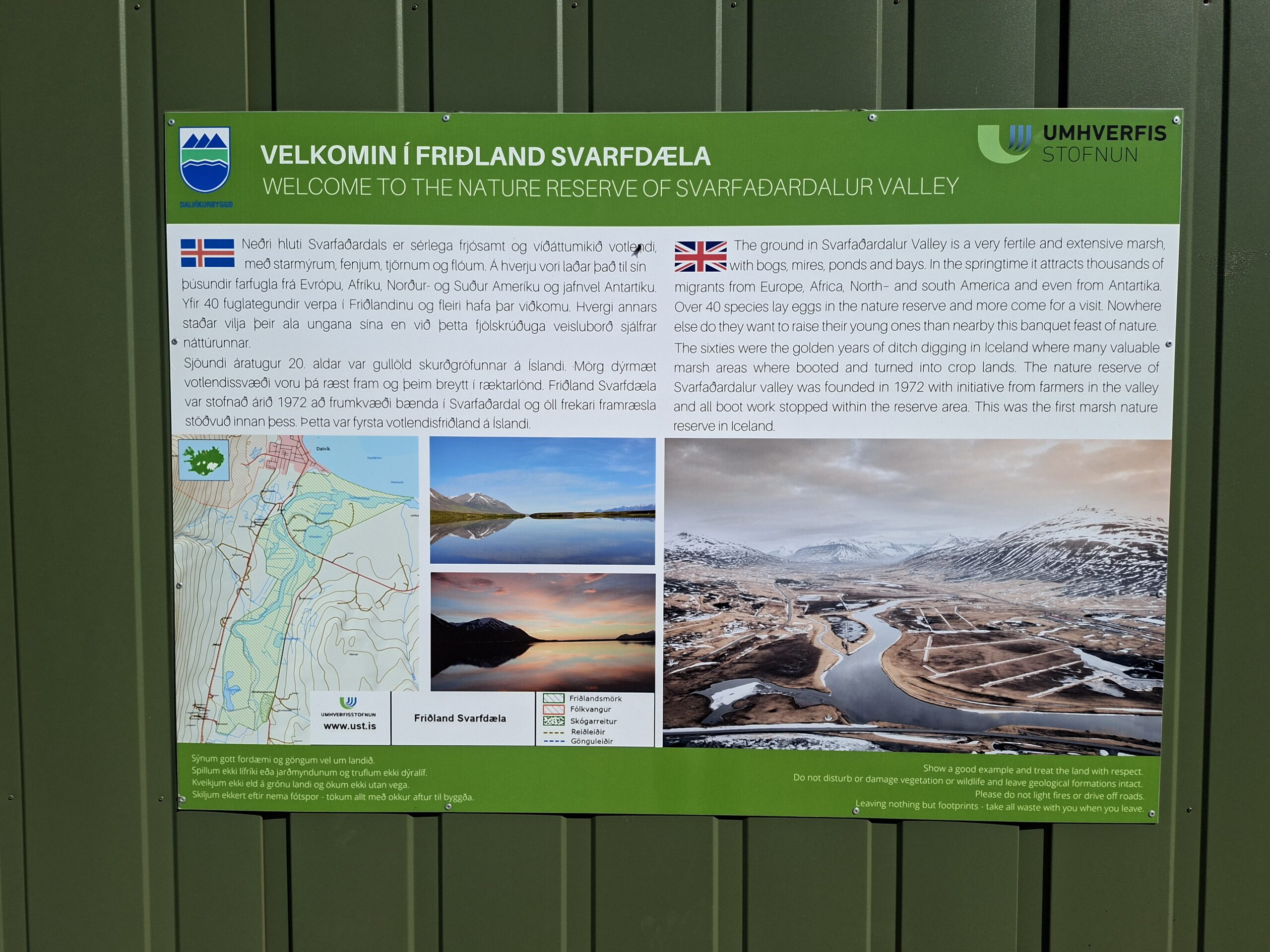
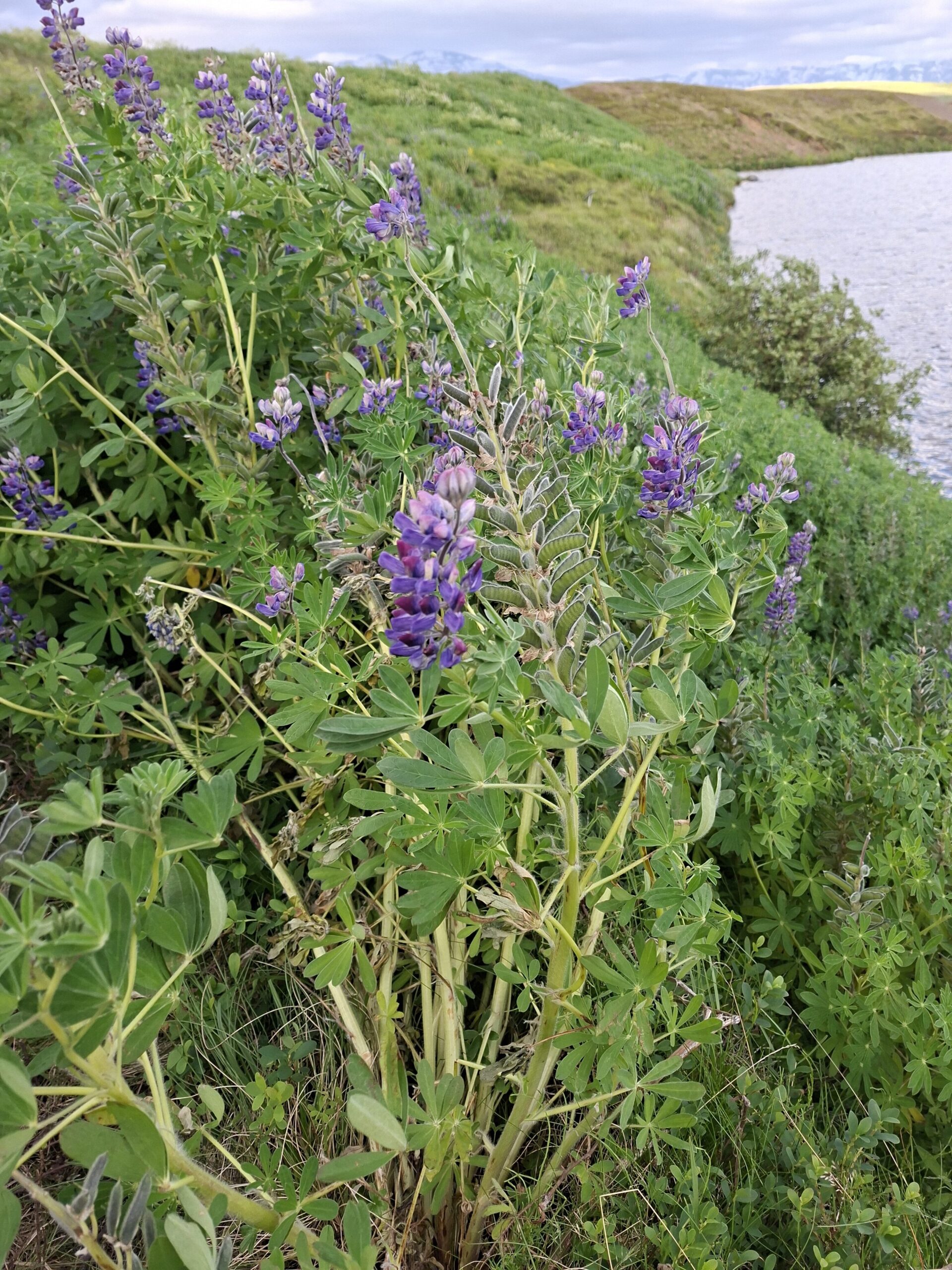
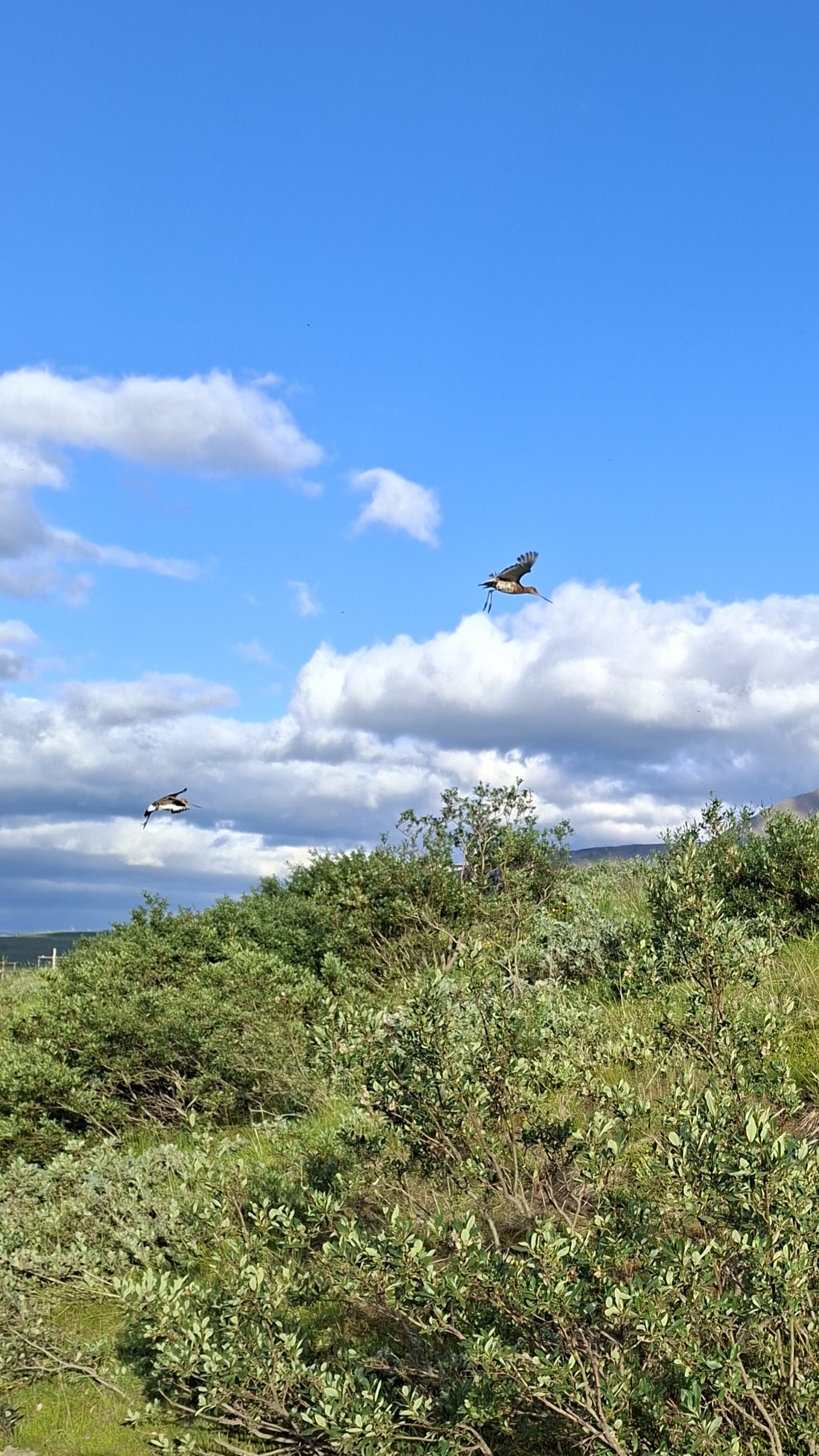
In the evening I take a stroll around the Svarfaðardalur valley nature reserve with my younger son: the cabin backs onto this heathland and wetland habitat. The downside is there are midges that come out at dusk; the upside is that dusk doesn’t fall until after midnight and all kinds of birds swirl round the cabin. I’m taken aback when a whimbrel sweeps down from the roof as we step inside, but after half an hour’s stroll round the reservoir I’ve become quite blasé about seeing whimbrels, arctic terns, godwits and redshanks (until now I only knew whimbrels from the title of a novel by the Dutch writer Maarten ‘t Hart). The black-tailed godwit, once a common site in the Netherlands, is in danger of extinction there, so perhaps I should smuggle a few home in my suitcase.
Despite the tiring drive north, I force myself to stay up for the midnight sun, which is still bright enough to read by, then turn in, ready to go whale watching in the morning.