Friday, July 17
Travel time: 25 minutes
Distance: 24km
Destination: Hauganes
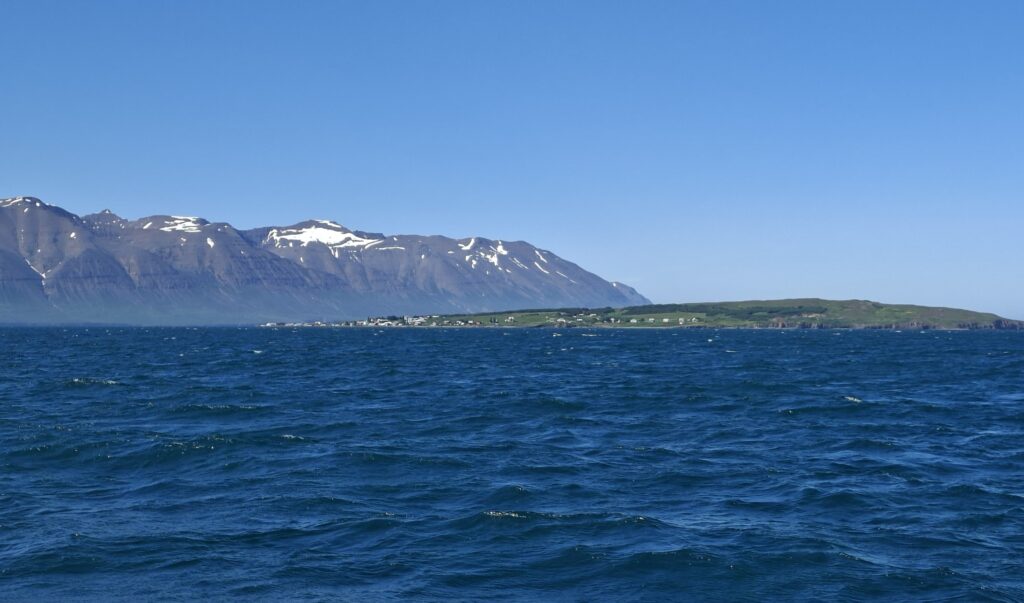
We awake to piercing blue skies and a total absence of wind, the kind of midsummer’s day you expect in the Austrian Alps rather than northern Iceland. After lunch I drive down with my son past the island of Hrisey, which on a day like today occupies an idyllic spot beneath the snow-scarred peaks that jut above the Eyjafjörður estuary, towards Hauganes. The village proudly claims to have the country’s original and best whale watching tour in wood-panelled boats. The combination of Icelanders, boats and whales has been, until recent times, an unsavoury one, and although killing whales for food and sport is a dying practice, the industry has persisted by offering whale meat to unsuspecting tourists as a cultural curiosity. All I can say is that the tour I went on was wholly focused on admiring these majestic creatures and protecting what are now endangered species, and at no point was it even suggested that we should try eating them.
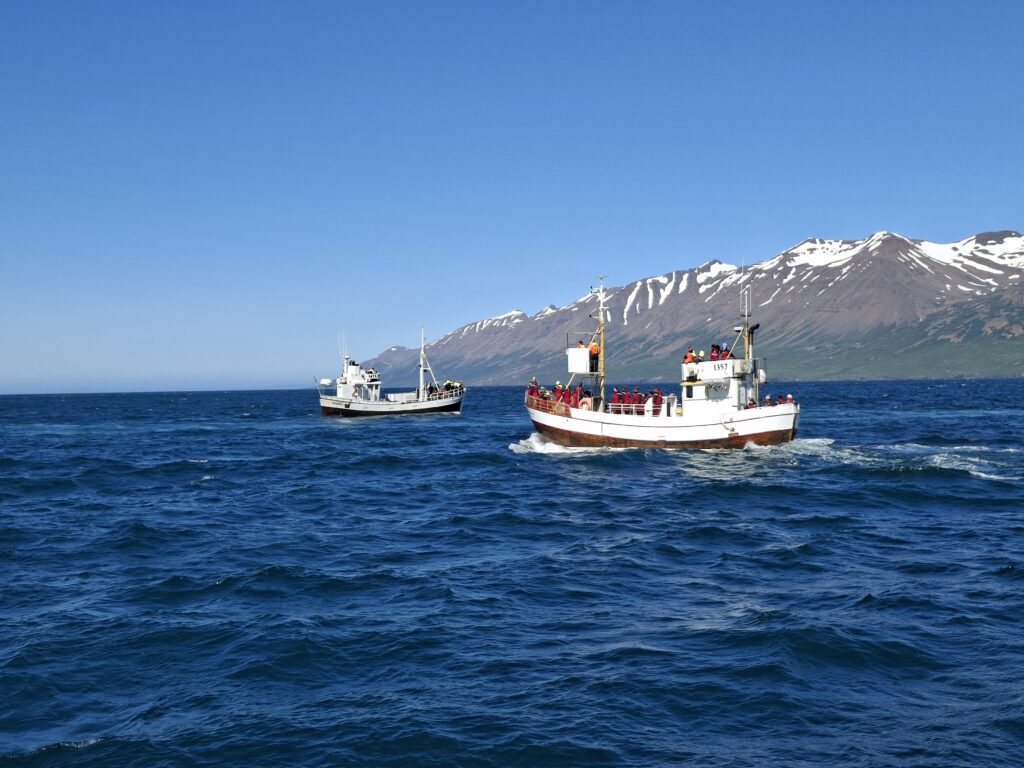
The tour began just after lunchtime. On such a clear, crisp day, wetsuits were optional. We set out across the gleaming azure sea, bouncing over the waves, and within 10 minutes the first whale had been sighted, swimming just ahead of our boat. The tour guide directed the captain to head for 1 o’clock (using the same clock image beloved of makers of second world war movies about airborne dogfights) and the boat sped off to the right. Sure enough, the whale surfaced right alongside us, a shining black tube that rose in a graceful, almost slow-moving arc, for about three seconds before diving back down. The guide told us that he (the gender, it later emerged, was assumed) had “shown us his tail”, which indicated he was busy feeding. Several minutes later the whale popped up again – five to ten minutes is the standard length of a dive – this time on our left, before ducking beneath the waves again.
This went on for around 10 minutes: the whale would appear briefly, sometimes only to breathe, before disappearing immediately. Another boat of whale watchers appeared on our left with a dozen people in wetsuits leaning over the bow. Suddenly our captain pivoted the boat and headed back the way we came, because the whale had now been spotted behind us. “He seems to have played a trick on us,” the guide said.
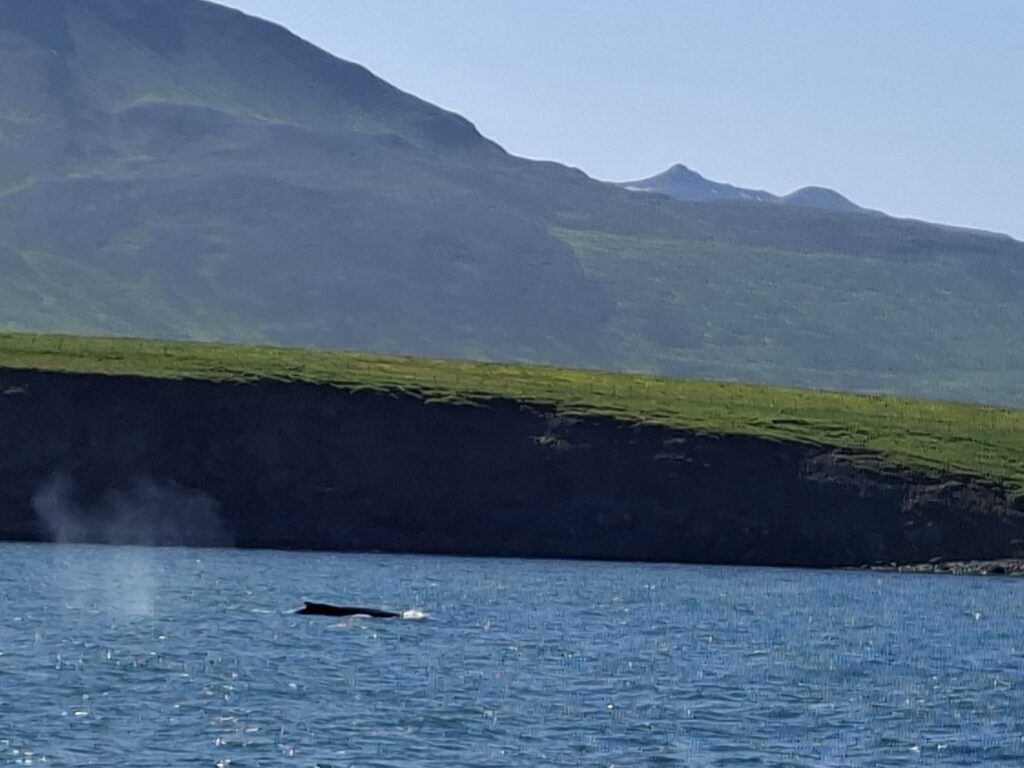
If this was meant as a joke, over the next half-hour it acquired a strong whiff of truth. It became clear that only one whale in the entire estuary was interested in showing up for tourists. The second boat was joined by a third, which was treated to a close-up view of the whale’s back as it surfaced right in front of its bow. Engines roared and waves rippled as the motor boats chased the splash-trails of the agile and mischievous creature. We were like England defenders being dispatched in all directions by Lionel Messi’s ball skills. A smaller inflatable rubber vessel, designed to give the closest possible view, joined the chase. We now had four boats full of overdressed humans playing cat-and-mouse with a 25-metre-long cetacean, who was clearly – and I apologise in advance for my choice of words – having a whale of a time at our expense. I wondered if the others were cheering on their star acrobat from the seabed with drinks and popcorn. It felt as if the tables had been well and truly turned.
Our boat pulled away from the whale after an hour of to go in search of other cetaceans and porpoises, but the humpback was clearly still toying with us, because he caught up and rose and dipped, who wasn’t done with us yet. Half an hour later it was time to pull back into port. The whale had given us plenty of flashes of back and tail and the captain had steered his boat skilfully to give us several close-up views of the whale breaking the waves. Our party stepped back on land, exhilarated at having seen one very active whale at close quarters. The tour leaders shouted out clock times rather than orders to launch the harpoon and the only culinary spin-off was a discount voucher for the local fish restaurant. So in the end, everyone enjoyed the sport, but the whale was unquestionably the winner.
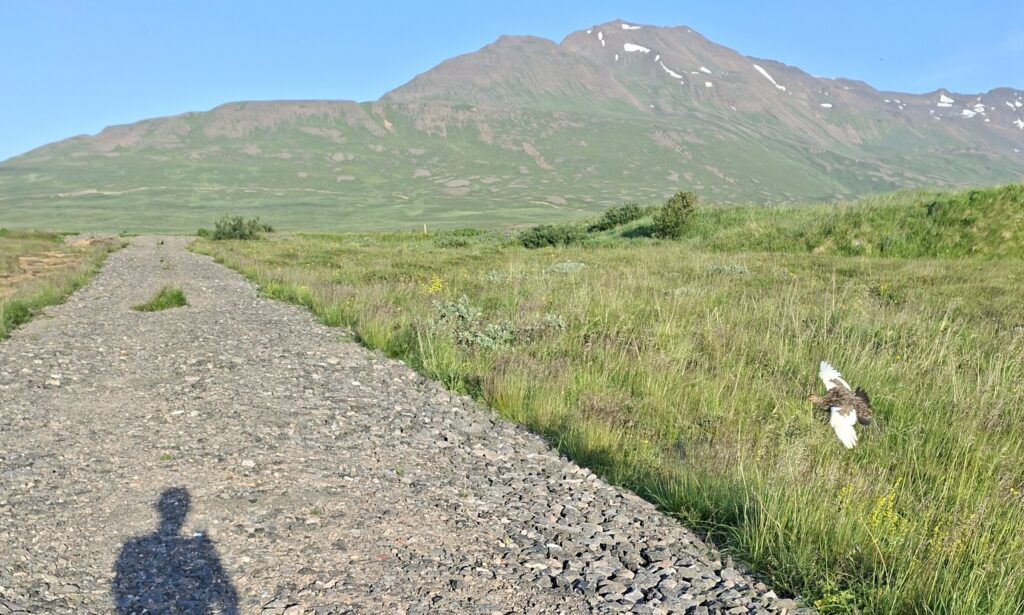
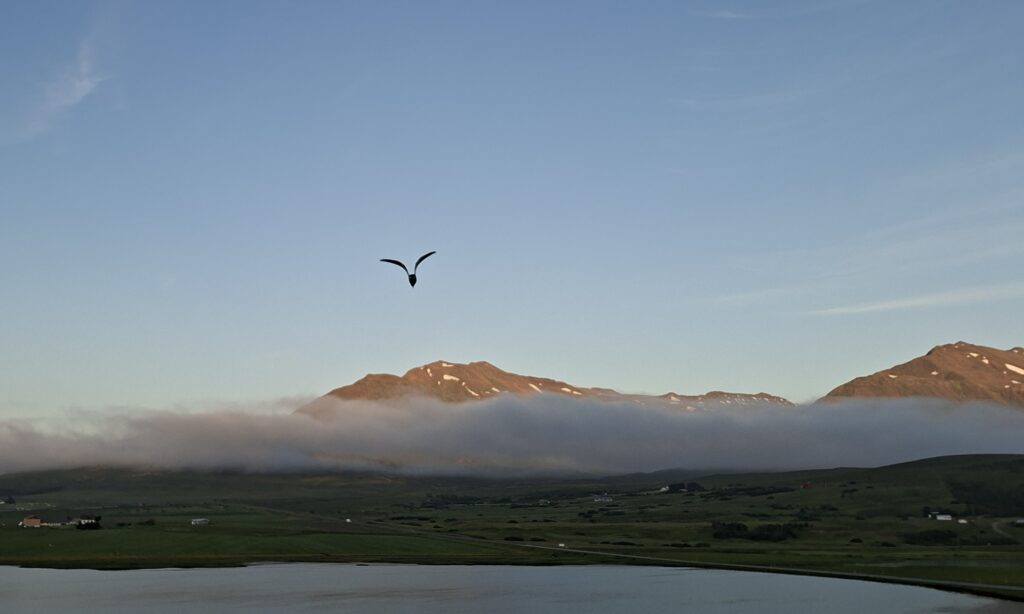
After supper I went for a run, back up towards Hauganes along a gravel track running parallel to the main road. Mindful of the fact I only have two ankles and one face, I trod carefully over the stones, labouring along the gentle uphill slope. At one point a bird rose up from the ground and flew in circles around me, as if marking its territory. Googling subsequently revealed it to be a rock ptarmigan in its summer plumage. It scuttled along in front of me as I jogged laboriously up the path, before reappearing as I made my way back. I wondered if it was offering to be my coach. In any case, it was a much more benign encounter than my last interaction with a bird while out running, when I had to defend myself against a swooping buzzard near Magteld’s parents’ house.
The sunlight stayed strong until well after midnight, but a few wispy clouds gathered in the valley in the late evening, suggesting tomorrow will be a less clear day. In any case, we are leaving Dalvik and heading south, past Reykjavik towards Selfoss, where we will be based for the next three nights.